Building a Secure Software Supply Chain: A Practical Guide to Protecting Open-Source Dependencies
Overview
Modern software development relies heavily on open-source components—often called packages—to accelerate delivery and reduce costs. However, this reliance also introduces significant security risks: malicious actors can inject backdoors, typosquat popular packages, or compromise legitimate repositories. The recent $60 million Series C funding round of Socket Inc. (at a $1 billion valuation) underscores the growing urgency of addressing these threats. Led by Thrive Capital with participation from Andreessen Horowitz, Capital One Ventures, and others, Socket has now raised $125 million in total outside funding to help developers secure their code from supply-chain attacks.
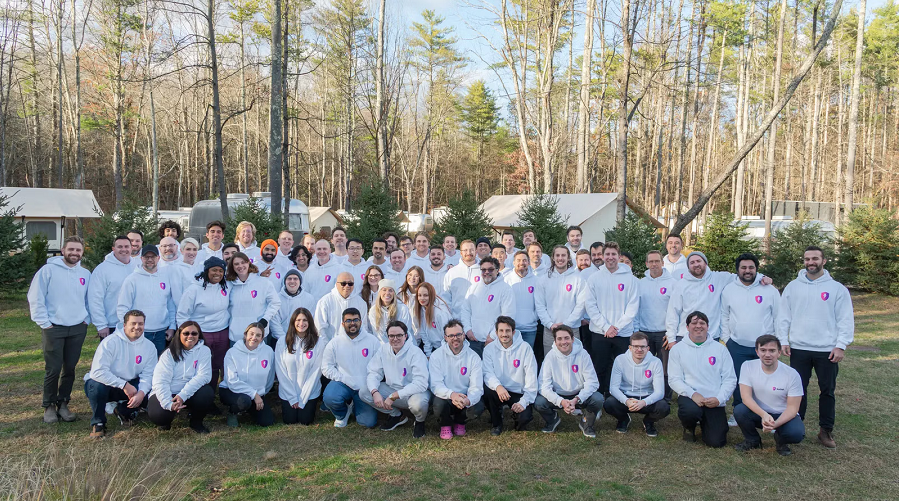
This tutorial provides a practical, step-by-step guide to evaluating and implementing a code security solution for open-source dependencies, using the principles that companies like Socket embody. Whether you are a solo developer or part of a large engineering team, you will learn how to assess risk, integrate security tools, and avoid common pitfalls—all while keeping your development workflow fast and frictionless.
Prerequisites
Before diving into the implementation steps, ensure you have the following:
- Basic understanding of package managers (npm, pip, Maven, etc.) and how dependencies are declared.
- Access to a development or CI/CD environment where you can install and configure security tools.
- Familiarity with your existing dependency workflows—e.g., how you add, update, or audit packages.
- Optional but recommended: A test repository or project to try out the security tools without affecting production code.
No prior security expertise is required; this guide will explain concepts as we go.
Step-by-Step Instructions
1. Understand the Threat Landscape for Open-Source Packages
Developers incorporate open-source components for their functionality, but each package is a potential attack vector. Common threats include:
- Malicious packages that contain hidden code to steal credentials, mine cryptocurrency, or create backdoors.
- Typosquatting where attackers publish packages with names similar to popular ones (e.g., ‘eventstream’ vs. ‘event-stream’).
- Compromised maintainer accounts leading to malicious updates in trusted packages.
- Dependency confusion where internal package names are taken over in public registries.
Socket’s approach focuses on detecting these risks by analyzing package behavior, not just known vulnerabilities. The company has raised significant funding—$60 million in its Series C round—to scale this approach.
2. Evaluate a Code Security Solution
Before integrating any tool, define your criteria:
- Coverage: Does it scan all layers of the dependency tree (direct and transitive)?
- Detection method: Signature-based (CVEs), behavioral analysis, or both?
- Integration ease: Can it plug into your existing CI/CD pipeline, version control, and package manager?
- Developer experience: Are alerts low-noise and actionable?
Socket, for instance, provides real-time protection by blocking risky packages before they are installed and by alerting on anomalous behavior. When evaluating, look for solutions that offer a similar proactive stance rather than reactive scanning.
3. Integrate the Security Tool into Your Development Workflow
Once you've chosen a solution (e.g., Socket, Snyk, or others), integrate it step by step:
- Install the CLI or plugin for your package manager. For example, with Socket you might run
npm install @socketsecurity/cli --save-dev. - Configure the tool by linking it to your repository. This often involves generating an API key and setting environment variables.
- Run an initial full scan of your project's dependencies to establish a baseline. For example:
socket scan --all. - Set up CI/CD hooks so that every pull request is automatically checked. Add a step like
npx socket checkin your build configuration. - Enable real-time alerts—ideally through Slack, email, or your incident management tool.
4. Interpret Scan Results and Take Action
After scanning, you'll see a list of flagged packages. Categorize them as:

- Critical/blocking: Packages with known malware or suspicious behavior. Remove or replace them immediately.
- High-risk: Typosquats, abandoned packages, or those with excessive permissions. Evaluate if a newer version or different package is safer.
- Low-risk/informational: Outdated versions or minor license issues. Address these during routine maintenance.
Socket’s dashboard often provides a risk score and detailed rationale. For each flagged item, investigate the transitive dependencies and decide whether to pin a specific version or switch to a maintained alternative.
5. Establish Ongoing Monitoring and Policy
Security is not a one-time event. Implement these practices:
- Daily or weekly automated scans to catch newly disclosed vulnerabilities.
- Policy-as-code to enforce rules (e.g., block any package with a risk score above 8).
- Developer training on how to vet packages and report suspicious behavior.
The $125 million in total funding that Socket has raised reflects the industry's recognition that continuous monitoring is essential for modern software supply chains.
Common Mistakes
Ignoring Transitive Dependencies
Many developers only audit the packages they directly import. Attackers often hide malicious code two or three levels deep. Always scan the full dependency tree.
Over-reliance on Vulnerability Databases
CVEs only cover known, reported vulnerabilities. They miss typosquats, freshly published malware, and other zero-day attacks. Behavioral analysis (like Socket performs) catches these.
Relying on a Single Security Tool
No tool is perfect. Use a layered approach: combine static analysis, dependency scanning, and secret detection. For example, pair Socket with a linter and a CVE database scanner.
Delaying Remediation
When a critical alert comes in, teams sometimes postpone fixes due to release deadlines. Create a policy that mandates immediate action for high-severity flags—just as you would for a production outage.
Not Monitoring After Merging
Post-merge monitoring is crucial because new malicious packages can appear at any time. Set up scheduled scans and alerts, not just CI checks on pull requests.
Summary
Securing your software supply chain requires a proactive, continuous approach to managing open-source dependencies. By understanding the threat landscape, evaluating tools like Socket (which recently raised $60 million at a $1 billion valuation), integrating them into your CI/CD, and avoiding common mistakes, you can significantly reduce the risk of supply-chain attacks. Start small, automate thoroughly, and treat dependency security as a core part of your development lifecycle—not an afterthought.