How to Master CSPNet: A Step-by-Step Implementation Guide from the Paper
Introduction
The Cross-Stage Partial Network (CSPNet) is a groundbreaking architecture that enhances computational efficiency without sacrificing accuracy. This guide walks you through understanding its core principles and implementing it from scratch in PyTorch. Whether you're a researcher or practitioner, by the end you'll be able to build your own CSPNet models.

What You Need
- Python 3.7+ installed on your system
- PyTorch 1.8+ (with CUDA optional)
- Basic familiarity with Convolutional Neural Networks (CNNs) and PyTorch syntax
- A code editor (e.g., VSCode) and a terminal
Step-by-Step Guide
Step 1: Understand the Motivation Behind CSPNet
Traditional backbones like DenseNet and ResNet suffer from redundant gradient information in early layers. CSPNet introduces a cross-stage partial connection that splits the feature map, processes only a portion through dense blocks, and concatenates it with the other portion. This reduces computation by 20-30% while maintaining or improving accuracy. Review the original paper for detailed theory.
Step 2: Study the Architecture Differences
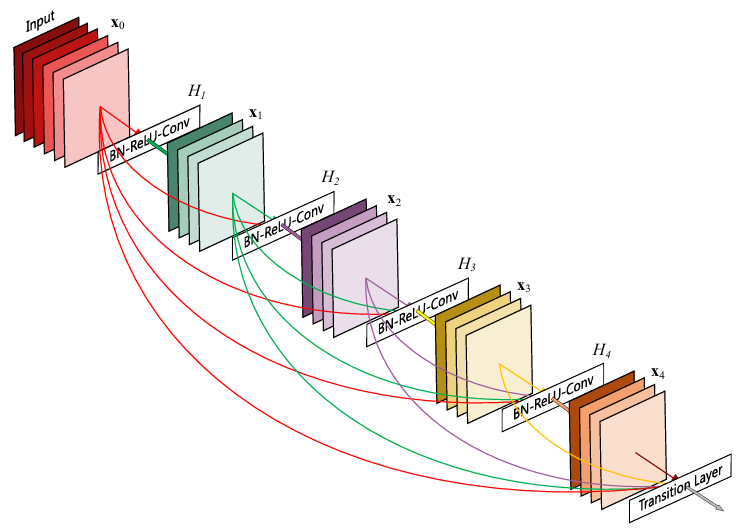
Compare CSPNet to DenseNet: In DenseNet, each layer receives concatenated outputs from all previous layers. CSPNet splits the input into two halves – one goes through a dense block, the other bypasses it. After processing, they are concatenated. This prevents the exponential growth of computation. For ResNet, the partial connection reduces the number of filters in the bottleneck layers. Sketch these differences to solidify understanding.
Step 3: Break Down the CSPNet Design
A typical CSPNet block consists of:
- Partial transition layer: reduces channels before splitting
- Cross-stage connection: splits feature maps into two parts
- Dense block or residual block: processes one part
- Concatenation: merges processed and unprocessed parts
- Transition layer: adjusts channels after concatenation
For a CSPDarknet (used in YOLOv4), the base is a Darknet with CSP connections.
Step 4: Implement Basic Building Blocks in PyTorch
Create a Python script. First, import PyTorch and define helper classes:
import torch
import torch.nn as nn
import torch.nn.functional as F

class ConvBnAct(nn.Module):
    def __init__(self, in_ch, out_ch, k=1, s=1, p=0, act=True):
        super().__init__()
        self.conv = nn.Conv2d(in_ch, out_ch, k, s, p, bias=False)
        self.bn = nn.BatchNorm2d(out_ch)
        self.act = nn.LeakyReLU(0.1) if act else nn.Identity()
    def forward(self, x):
        return self.act(self.bn(self.conv(x)))
Next, implement a CSP block. For simplicity, use a single residual block variant:
class CSPResBlock(nn.Module):
    def __init__(self, in_ch, out_ch, n=1):
        super().__init__()
        self.conv1 = ConvBnAct(in_ch, out_ch, 1)
        self.conv2 = ConvBnAct(out_ch, out_ch, 3, p=1)
        self.conv3 = ConvBnAct(in_ch, out_ch, 1)  # for shortcut
    def forward(self, x):
        return self.conv3(x) + self.conv2(self.conv1(x))
Step 5: Construct a Full CSPNet Model
Now assemble multiple CSPResBlocks with transition layers. Example for a small CSPNet for CIFAR-10:
class CSPNet(nn.Module):
    def __init__(self, num_classes=10):
        super().__init__()
        self.stem = ConvBnAct(3, 32, 3, 1, 1)
        self.stage1 = self._make_stage(32, 64, 2)   # 2 blocks
        self.stage2 = self._make_stage(64, 128, 2)
        self.stage3 = self._make_stage(128, 256, 2)
        self.pool = nn.AdaptiveAvgPool2d(1)
        self.fc = nn.Linear(256, num_classes)

    def _make_stage(self, in_ch, out_ch, num_blocks):
        layers = []
        # Transition and partial split
        layers.append(ConvBnAct(in_ch, out_ch, 1))
        for _ in range(num_blocks):
            layers.append(CSPResBlock(out_ch, out_ch))
        layers.append(ConvBnAct(out_ch, out_ch, 1))
        return nn.Sequential(*layers)

    def forward(self, x):
        x = self.stem(x)
        # For true CSP, split x here. Simplified version: sequential.
        x = self.stage1(x)
        x = self.stage2(x)
        x = self.stage3(x)
        x = self.pool(x).view(x.size(0), -1)
return self.fc(x)Note: For a genuine CSPNet, you need to split the tensor inside each stage. The above is a simplified foundation. Refer to the paper for exact splitting logic.
Step 6: Train and Evaluate the Model
Create a training loop using standard PyTorch data loaders (e.g., CIFAR-10). Use cross-entropy loss and an optimizer like Adam. Monitor accuracy and loss. After training, compare inference speed and accuracy against a non-CSP baseline to observe the tradeoff benefits.
Tips for Success
- Start small: Test on a toy dataset like CIFAR-10 before moving to ImageNet-scale experiments.
- Use pretrained weights: If you only need the backbone, download official CSPDarknet53 weights for YOLOv4.
- Memory optimization: CSPNet reduces GPU memory usage – enable gradient checkpointing for larger models.
- Beware of the split ratio: The paper uses a 50/50 split. Experiment with different ratios for your task.
- Performance benchmarking: Measure both FLOPs and actual inference time, as CSPNet shines in both.